
What Is Causing My Ankle Pain? Understanding Ankle Sprains

Ankle pain is one of the most common concerns we see in physiotherapy, they are one of those injuries that might not seem like a big deal at first, but without proper rehab, people can end up with long term instability in their ankle. This can mean reoccurring ankle sprains (which is never fun) and sometimes an early onset of arthritis.
What Happens When You Roll or Sprain Your Ankle?
During activities that involve a lot of running, change of direction, landing and uneven surfaces, occasionally the external forces on your ankle may exceed the ligament's ability to cope. The ankle is designed to be mobile, but if it is stretched outside of its normal range the supporting ligaments can stretch or even rupture. The most commonly injured ligament is on the outside of your ankle called your Anterior Talofibular Ligament or ATFL which (usually) stops your ankle from rolling out.
Common Ankle Sprain Symptoms
An injury like this commonly results in:
Ligament damage
Swelling around the ankle and foot
Bruising within 48 hours
Pain with weight bearing
Reduced ankle movement, strength and balance
How long will it take for my ankle to heal?
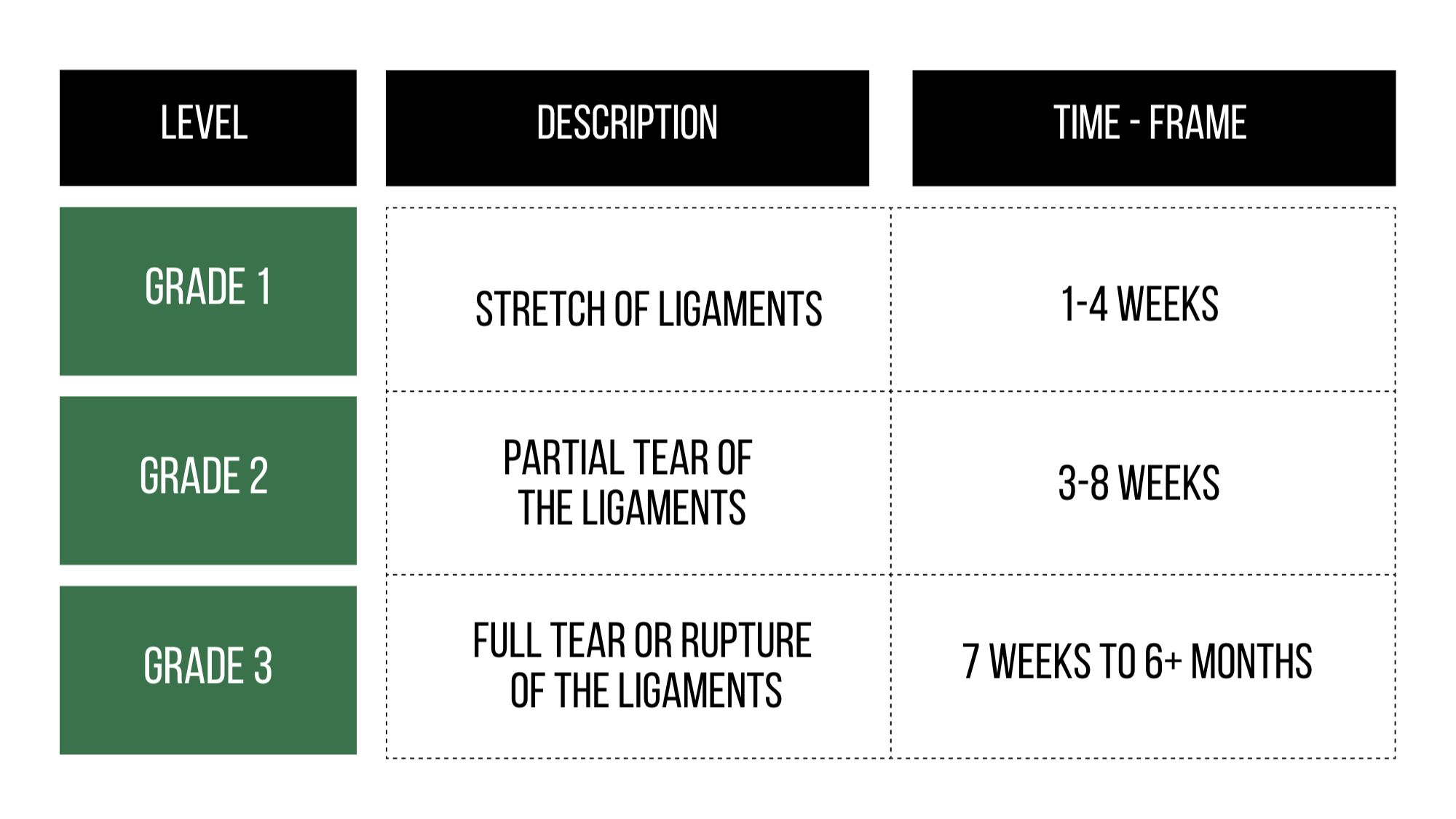
This will depend on the severity of the ankle sprain and pre-existing factors but generally ankle sprain timeframes fall into these categories:
What Should I Do After Spraining My Ankle?
After you initially roll your ankle, you likely will be in a bit of pain with some swelling and even bruising. Within the first 72 hours it is important to avoid high load activities such as running and jumping. We also want to control the swelling without limiting healthy inflammation. You can do this by wearing a compression bandage or brace. It is also important to start some gentle pain free movement to encourage blood flow to the area but to also improve your mobility. After you have done these things, I recommend going to see your physio so they can start your graded rehab program.
How Can Physiotherapy Help an Ankle Sprain?
Physiotherapy is key for ankle rehab. The biggest risk after an ankle sprain is long term instability. Without proper rehab, your ankle often loses proprioception (joint position awareness), muscle strength in the peroneals (one of your muscle groups around your lower leg), balance and reaction speed. Deficits in these areas will mean you are more likely to have recurring injuries and can even predispose you to early onset of arthritis. But fear not, your physiotherapist will work with you in these areas by creating tailored care, specific to you and your goals so you can return to doing the activities you love. This will usually include:
Soft tissue release or dry needling
Taping or bracing
Education
The good news is that ankle sprains are almost always funded under ACC. Rehab Co is an ACC-registered provider, so if you’ve injured your ankle, come in and see me (Jack - from the Christchurch clinic) or one of our team for an assessment and to get your rehab process started.
We have 7 convenient locations across Auckland, Wellington and Christchurch, making it easy to find a Rehab Co clinic near you.
Author: Physiotherapist, Jack Myles